Saturday, May 16, 2026

Trajectory of Bengaluru to 2050s


Let us do a thought experiment. Consider the current situation of Bengaluru in 2026. Compare historically the same PESTEL situation across historical records in the 1900 to 1999 and compare how that city has performed to the current 25 year growth or depreciation.

What makes Bengaluru fascinating is that it has already lived through at least three distinct “growth civilizations” in the 20th century:

  1. the colonial-administrative science city (1900–1947),
  2. the public-sector industrial city (1950s–1980s),
  3. the global IT-services megacity (1990s onward).

The question is whether the 2026 city is entering a fourth phase — or hitting the limits of the third.

A PESTEL lens is actually a very good way to compare these eras.


Bengaluru 2026: Current PESTEL Snapshot

Political

  • Karnataka remains one of India’s most economically productive states, and Bengaluru is its fiscal engine.
  • The city increasingly faces a governance mismatch: a megacity economy with fragmented urban administration.
  • The state is now openly discussing long-range metro-region economic planning and a “$300B Bengaluru region” strategy.

Historical Parallel

This resembles:

  • 1970s Bengaluru, when the state aggressively used public-sector expansion and industrial policy to scale the city.
  • Difference: back then the state was building capacity; today it is managing overload.

Economic

Current strengths:

  • IT/ITES dominance
  • startup ecosystem
  • aerospace/deep tech
  • global capability centers (GCCs)
  • strong MSME base
  • high per-capita productivity

The city contributes an enormous share of Karnataka’s economy and remains among India’s strongest urban growth engines.

But:

  • land costs are extreme,
  • infrastructure lag is increasing,
  • productivity losses from congestion are compounding,
  • inequality between tech corridors and outer districts is widening.

Historical Parallel

This mirrors:

  • Bombay in the late 1970s
  • Los Angeles in the late 1980s
  • Shanghai in the early 2000s

Meaning:
the city is transitioning from a “high-growth opportunity zone” into a “high-cost mature metro.”

That transition is historically dangerous if infrastructure fails to catch up.


Social

2026 Bengaluru is:

  • highly migrant-driven,
  • young,
  • English-enabled,
  • globally connected,
  • culturally hybrid.

But social stress is visibly rising:

  • housing affordability,
  • commute fatigue,
  • water insecurity,
  • identity politics,
  • class segregation between tech and non-tech populations.

Historical Parallel

Compare with:

  • 1970s–80s Bengaluru:
    • slower pace,
    • PSU middle-class stability,
    • lower inequality,
    • stronger neighborhood cohesion.

The modern city has much higher opportunity — but weaker civic cohesion.

A lot of longtime residents describe the current phase as:

“economically richer, socially thinner.”

That sentiment appears repeatedly in community discussions.


Technological

This is Bengaluru’s strongest historical continuity.

1900–1940

Science institutions:

  • hydroelectric adoption,
  • early engineering education,
  • establishment of Indian Institute of Science in 1909.

1950–1985

Deep state-tech ecosystem:

  • aerospace,
  • defense,
  • electronics,
  • telecom,
  • scientific manufacturing.

1990–2026

Software and digital globalization:

  • outsourcing,
  • SaaS,
  • AI,
  • startup capital,
  • GCCs.

The city’s biggest historical advantage is not “IT.”

It is institutional compounding.

Every phase inherited talent infrastructure from the previous one:
colonial science → PSU engineering → software → AI/startups.

That is rare in Indian urban history.


Environmental

This is where the 2026 city looks historically weakest.

Major stressors:

  • groundwater depletion,
  • lake degradation,
  • heat-island growth,
  • flooding,
  • traffic pollution,
  • shrinking green cover.

Historically, Bengaluru’s climate and lakes were part of its economic advantage.

By comparison:

EraEnvironmental Position
1900–1950Ecological advantage
1950–1990Manageable urban expansion
1990–2026Ecological overshoot

The city’s original carrying capacity was never designed for a 15M+ metro economy.


Legal / Governance

Historically, Bengaluru grew faster than its institutions.

But today the gap is much larger:

  • planning fragmentation,
  • delayed infrastructure execution,
  • land regulation complexity,
  • overlapping agencies,
  • weak metropolitan governance.

This resembles:

  • São Paulo,
  • Jakarta,
  • Manila,
    more than Singapore or Seoul.

Now Compare the Historical Eras

1900–1947: “Scientific Administrative City”

Core Growth Driver

State-sponsored modernization.

Key Characteristics

  • electricity adoption very early for India,
  • scientific institutions,
  • cantonment + princely administration,
  • moderate population density,
  • high environmental quality.

PESTEL Summary

FactorStatus
PoliticalStable princely + colonial administration
EconomicLimited but high-quality growth
SocialElite administrative city
TechnologicalVery advanced for its time
EnvironmentalExcellent
LegalCoherent governance

Long-Term Outcome

This period created the institutional DNA that later enabled industrialization.

Without this phase, modern Bengaluru probably never emerges.


1950–1985: “Public Sector Industrial Bengaluru”

This is the most underrated phase in the city’s history.

Core Growth Driver

Indian state-led industrialization.

Major institutions and industries:

  • aerospace,
  • defense,
  • telecom,
  • machine tools,
  • electronics,
  • public-sector engineering.

Migration surged heavily in this era.

PESTEL Summary

FactorStatus
PoliticalStrong state planning
EconomicIndustrial diversification
SocialStrong middle-class formation
TechnologicalEngineering/manufacturing boom
EnvironmentalBeginning of urban sprawl
LegalStronger planning than today

Historical Performance

This era produced:

  • resilient employment,
  • technical workforce,
  • urban upward mobility.

Importantly:
the city’s growth was slower but structurally balanced.


1990–1999: “IT Inflection Point”

This decade changed everything.

Core Growth Driver

Globalization + software exports.

Electronic City, Whitefield, and multinational entry accelerated rapidly.

PESTEL Summary

FactorStatus
PoliticalLiberalization tailwinds
EconomicExplosive service-sector growth
SocialMassive migration wave
TechnologicalSoftware revolution
EnvironmentalInfrastructure strain begins
LegalGovernance starts lagging growth

This was probably Bengaluru’s:

highest “opportunity-to-cost ratio” period in history.

People could still:

  • buy land,
  • commute reasonably,
  • enter the middle class quickly.

That window largely closed after 2010.


So How Does 2026 Compare?

The Big Historical Pattern

EraMain AssetMain Weakness
1900–1947InstitutionsSmall economy
1950–1985Industrial depthBureaucratic limits
1990–2010Global IT accelerationEarly infrastructure neglect
2010–2026Scale & capitalUrban overload

Has Bengaluru Appreciated or Depreciated Over 25 Years?

The answer is:

economically appreciated,

civically depreciated.

That sounds contradictory, but historically many successful megacities follow this exact pattern.


Appreciation (1999 → 2026)

The city massively improved in:

  • GDP scale,
  • global connectivity,
  • salaries,
  • startup density,
  • innovation output,
  • international relevance,
  • airport and metro infrastructure,
  • venture capital concentration.

The economy is vastly larger and more sophisticated now.


Depreciation (1999 → 2026)

The city worsened in:

  • commute quality,
  • affordability,
  • environmental resilience,
  • urban planning coherence,
  • water security,
  • average daily livability.

Historically, this is what happens when:

economic velocity exceeds governance velocity.


The Historical Analogy That Fits Best

The closest historical comparison may actually be:

CitySimilarity
San FranciscoTalent concentration + housing crisis
ShanghaiHyper-growth urban transformation
São PauloInfrastructure lag vs economic importance
Seoul (1980s)Tech-led transition phase
Hyderabad (today)Emerging competitor with newer infrastructure

Most Important Historical Insight

Bengaluru’s success was never accidental.

Each growth wave built on the previous one:

  1. science institutions,
  2. public-sector engineering,
  3. manufacturing,
  4. telecom/electronics,
  5. software,
  6. startups/AI.

Cities that sustain growth over 100+ years usually have this kind of institutional continuity.

But historically, cities plateau when:

  • infrastructure collapses,
  • housing becomes exclusionary,
  • environmental systems fail,
  • governance fragmentation persists.

That is the crossroads Bengaluru appears to be approaching in 2026.

Okay. Since you have given this example of 5 cities. Tell me how they have compared to the current timelines from 1999 to 2026. | City | Similarity | | ----------------- | --------------------------------------------- | | San Francisco | Talent concentration + housing crisis | | Shanghai | Hyper-growth urban transformation | | São Paulo | Infrastructure lag vs economic importance | | Seoul (1980s) | Tech-led transition phase | | Hyderabad (today) | Emerging competitor with newer infrastructure |

The interesting thing is that all five cities hit a similar “inflection curve” — explosive economic success followed by some form of urban stress. But they resolved it very differently.

Bengaluru today sits somewhere between:

  • San Francisco’s talent concentration problem,
  • Shanghai’s growth acceleration,
  • and São Paulo’s governance strain.

The question is which path dominates from 2026–2050.


1. San Francisco

“Innovation Capital vs Livability Collapse”

6

1999–2026 Timeline

1999–2001

Dot-com boom:

  • internet startups,
  • venture capital explosion,
  • speculative wealth creation.

2002–2012

Recovery + Web 2.0:

  • Google,
  • Facebook,
  • cloud computing,
  • mobile economy.

2013–2026

AI + platform capitalism:

  • massive wealth concentration,
  • global talent magnet,
  • severe housing shortages,
  • middle-class displacement.

Today the Bay Area remains the world’s densest innovation ecosystem, especially in AI.


How It Compares to Bengaluru

FactorSan FranciscoBengaluru
Talent densityExtremeRapidly approaching
Housing affordabilitySevere crisisEntering crisis phase
InfrastructureBetter transit, constrained geographyWeaker infrastructure, more land
Wealth creationMassiveMassive but lower per-capita
GovernanceSlow zoning politicsFragmented urban governance
Economic moatFrontier innovationServices + AI + GCCs

Key Lesson for Bengaluru

San Francisco proved:

talent concentration alone does not guarantee urban quality.

It became extraordinarily wealthy while simultaneously becoming harder to live in.

Bengaluru is beginning to show similar symptoms:

  • elite salary inflation,
  • housing pressure,
  • spatial inequality,
  • infrastructure exhaustion.

But Bengaluru still has one advantage:

it has not yet fully ossified.

The Bay Area’s zoning and land politics became nearly impossible to reform. Bengaluru’s urban form is still fluid enough to expand outward.


2. Shanghai

“Hyper-Growth Transformation”

6

1999–2026 Timeline

Shanghai in 1999 already looked ambitious.

By 2026:

  • it became a global financial hub,
  • logistics powerhouse,
  • manufacturing-tech hybrid,
  • infrastructure megacity.

The scale difference is almost absurd.

What Changed?

  • massive state-directed investment,
  • metro expansion,
  • coordinated urban planning,
  • industrial policy,
  • export integration.

Shanghai’s infrastructure grew almost as fast as its economy.

That is the crucial difference from Bengaluru.


Comparison to Bengaluru

FactorShanghaiBengaluru
Economic growth speedExtremeVery high
Infrastructure executionExtremely fastSlow/inconsistent
Governance modelCentralizedFragmented democratic
HousingExpensive but heavily suppliedExpensive + undersupplied
TransitMassive metro buildoutCatch-up phase
Environmental costSevere pollution historicallyWater/ecology stress

Key Lesson

Shanghai demonstrates:

if infrastructure scales with economic growth, megacities can sustain momentum for decades.

Bengaluru’s challenge is the opposite:

  • economic growth outran infrastructure for 20+ years.

The city created:

  • global-scale jobs,
  • but not global-scale urban systems.

3. São Paulo

“Economic Giant, Infrastructure Stress”

6

1999–2026 Timeline

São Paulo became:

  • Brazil’s financial engine,
  • Latin America’s corporate capital,
  • a massive consumption economy.

But:

  • inequality deepened,
  • congestion worsened,
  • peripheral urbanization exploded.

Britannica describes how explosive migration overwhelmed the metro region over decades.


Comparison to Bengaluru

FactorSão PauloBengaluru
Economic centralityDominates national economyDominates Karnataka economy
Migration pressureHugeHuge
Commute stressSevereSevere
Informal expansionLarge peripheriesIncreasing peri-urban sprawl
Governance complexityHighHigh
Elite enclaves vs working zonesStrong separationIncreasing separation

Why This Comparison Matters

This may actually be Bengaluru’s closest structural analogue.

Why?

Because both cities:

  • became too economically important for their governance systems,
  • absorbed enormous migration,
  • developed unevenly,
  • and struggled to synchronize infrastructure with growth.

The danger is not collapse.

The danger is:

permanent inefficiency.

That is what São Paulo teaches.

A city can remain rich and globally important while becoming chronically exhausting to operate.


4. Seoul

“The Successful Tech-Industrial Transition”

6

1980s–2026 Timeline

Seoul’s transition is what Bengaluru hopes to achieve.

1980s

  • manufacturing-heavy,
  • export-driven,
  • state-guided industrialization.

1990s–2000s

  • electronics,
  • semiconductors,
  • telecom,
  • global consumer brands.

2010s–2026

  • advanced digital economy,
  • AI,
  • biotech,
  • cultural exports,
  • high-quality infrastructure.

Comparison to Bengaluru

FactorSeoulBengaluru
Tech transitionManufacturing → advanced techIT services → AI/deep tech
Infrastructure qualityWorld-classDeveloping
TransitExcellentImproving slowly
Housing pressureHigh but managedIncreasing rapidly
State capacityVery highModerate
Education pipelineElite national systemStrong but uneven

Most Important Difference

Seoul upgraded:

  • institutions,
  • transit,
  • housing,
  • manufacturing sophistication,
    at the same time.

Bengaluru upgraded mostly:

  • software capability,
  • private-sector capital,
  • talent density.

That imbalance matters historically.


5. Hyderabad

“The Emerging Challenger”

6

1999–2026 Timeline

Hyderabad followed Bengaluru later — but more strategically.

2000–2010

  • HITEC City,
  • pharma,
  • IT parks,
  • airport-led expansion.

2010–2026

  • GCC growth,
  • AI/data centers,
  • better roads,
  • planned corridors,
  • lower housing costs.

Comparison to Bengaluru

FactorHyderabadBengaluru
Infrastructure freshnessNewerOlder/stressed
TrafficGrowing but manageableSevere
Water stressPresent but more plannedAcute
Startup densityRisingDominant
Tech ecosystem maturityStrongMuch deeper
Urban planningMore coordinatedFragmented

Why Hyderabad Matters Historically

Hyderabad resembles:

Bengaluru around 2005–2012.

Meaning:

  • high opportunity,
  • lower urban stress,
  • expanding infrastructure,
  • strong government-business alignment.

This is why companies increasingly diversify operations there. Bengaluru still leads in talent density, but Hyderabad is competing on livability and execution.


The Bigger Historical Pattern

All five cities followed a similar arc:

y=ekty=e^{kt}

Economic growth in successful cities tends to behave exponentially at first:

  • talent attracts capital,
  • capital attracts firms,
  • firms attract migration,
  • migration increases land values,
  • land pressure strains infrastructure.

Eventually the curve bends.

The question is:

does the city evolve into a sustainable advanced metropolis —

or a permanently overloaded economic machine?


Where Bengaluru Likely Fits in 2026

City AnalogyBengaluru Resemblance
San FranciscoTalent concentration + affordability crisis
ShanghaiRapid economic scaling
São PauloGovernance lag and congestion
SeoulPotential future if infrastructure catches up
HyderabadCompetitive pressure from newer urban systems

The Most Likely 2026–2050 Scenario

Historically, Bengaluru probably does not collapse.

Its institutional depth is too strong:

  • IISc,
  • IT ecosystem,
  • startups,
  • GCCs,
  • engineering pipeline,
  • venture capital,
  • multinational integration.

But it may split into two futures:

ScenarioOutcome
Seoul pathHigh-density advanced innovation metropolis
São Paulo pathRich but permanently strained megacity

Right now, Bengaluru looks economically closer to Seoul’s trajectory —
but institutionally closer to São Paulo’s.


Saturday, January 17, 2026

Answer to future questions!

Every organization these days uses 5 modes of customer engagement:

  1. YouTube

  2. Instagram

  3. WhatsApp

  4. Snapchat

  5. TikTok

Except TikTok, the factor of engagement quadruples if you account for the order from descending 4 to 1.

We have to use next-generation tools to engage, not some outdated design software that someone in the 1980s or 1990s would appreciate.

I can show my "Policing" act here… if you allow me… which would result in me sharing the AI video and advanced editing work.

But it will sound arrogant to say to an organization, “Why are you not doing this?”

Legal terms will come into play and sound like, “Without using AI, without leveraging influencers, we are not in liberty to alter anything.”

Ultimately, they just want to milk money from every so-called “creative” idea.

By doing this, I will be angry and disgusted… and will start to check every penny spent on this useless piece of video that everybody wants to make money out of.

Some small-time influencer, struggling to make ends meet, will come to me.

I checked with one such firm and its founder… seems they have explored the local market and milked it without much international outreach. I think they are reasonably good for their age and experience. But talent-wise, they are pretty old school.

People are mostly from Tier 2 cities, doing small video editing and website SEO work as their main business.

My life is built on a chain of events that are predestined for me to meet those people who are going to help me in the future.

When I met an industry veteran in 2015, we were seeking investment and opportunities to collaborate.

He was genuine and kind enough to tell me and my then co-founders to our face: “You are not the right team to work on big projects.”

Little did I know, that became my drive to understand what they were doing differently than me.

I am like the guy in the hot seat of Slumdog Millionaire. I just know the answers to the questions which are learned by experiences.

Watch the clip here


Saturday, November 1, 2025

3I/ATLAS at Perihelion: A Cosmic Mystery Worth Watching


Sample images showing the morphological development of 3I/ATLAS. The image dates and heliocentric distances of the comet are shown in each panel, as is a 10′′ scale bar. Sunward is West. The location of the brightest pixel is marked with a red dot, showing that the dust is extended asymmetrically towards the West in the early data, reversing to the East as the radiation pressure swept tail develops in the later data.

On October 29, 2025, the interstellar object 3I/ATLAS reached its perihelion, its closest approach to the Sun, at precisely 7:47 AM Eastern Time. While hidden from Earth-based telescopes behind the Sun, this enigmatic visitor continues to challenge our understanding of what interstellar objects can be.

What Is 3I/ATLAS?

3I/ATLAS is the third confirmed interstellar object to enter our Solar System, following 1I/‘Oumuamua and 2I/Borisov. Unlike its predecessors, 3I/ATLAS is massive, estimated to be at least 5 kilometers in diameter and exhibits a range of anomalies that have prompted serious scientific inquiry into whether it might be of technological origin.

Could We Have Imaged It?

Yes, if Earth had been on the opposite side of its orbit. Radar systems like Goldstone’s 70-meter antenna could have captured detailed images of 3I/ATLAS had it passed within 54 million kilometers of Earth. Unfortunately, its closest approach will be 269 million kilometers on December 19, 2025, making radar detection infeasible due to the steep inverse fourth-power dependence of radio flux on distance. Put simply, 3I/ATLAS would have zipped past our most powerful detectors at a distance five times beyond their optimal range for capturing detailed imagery.


 Captured from : https://atlascomet.com/3d-interstellar-tracker 

Eight Anomalies That Defy Expectations

Prof. Avi Loeb, head of the Galileo Project, has assigned 3I/ATLAS a rank of 4 on the Loeb scale (0 = definitely natural, 10 = definitely technological). Here are the eight anomalies that contribute to this ranking:

  1. Trajectory Alignment: Its path is aligned within 5° of the ecliptic plane, a configuration with only a 0.2% likelihood.

  2. Sunward Jet (Anti-Tail): Observed in July–August 2025, this jet defies the usual optical illusion explanation for comet tails.

  3. Mass and Speed: It is a million times more massive than ‘Oumuamua and a thousand times more massive than Borisov, while moving faster than both, an extremely rare combination.

  4. Fine-Tuned Arrival: Its trajectory brought it close to Mars, Venus, and Jupiter, while remaining unobservable from Earth at perihelion—a configuration with a mere 0.005% likelihood.

  5. Nickel-Rich Plume: The gas plume contains much more nickel than iron, resembling industrial alloys, and has a nickel-to-cyanide ratio orders of magnitude higher than known comets.

  6. Low Water Content: Only 4% water by mass, unlike typical comets.

  7. Extreme Negative Polarization: Unprecedented among known comets, including Borisov.

  8. Arrival Direction: Coincides within 9° of the famous “Wow! Signal” detected in 1977.

Multiplying these improbabilities yields a cumulative likelihood lower than one in ten quadrillion, suggesting that 3I/ATLAS may not be a typical comet.

What Would Confirm a Technological Origin?

Loeb suggests that if 3I/ATLAS:

  • Maneuvers,

  • Releases mini-probes,

  • Emits radio signals,

  • Displays artificial lights or excess heat,

…then we could confirm it as a technological artifact. Radio observatories are now monitoring it, and efforts are underway to release HiRISE images taken on October 2, 2025.

Why This Matters

If 3I/ATLAS turns out to be technological, it would imply capabilities far beyond our own. Starship, our largest rocket, is 100 times smaller than this object. As Loeb puts it: “Science is better than fiction, because nature might be more imaginative than the best script writers in Hollywood.”

References

  1. Prof. Avi Loeb: Blog

  2. Trajectory alignment likelihood

  3. Sunward jet observation

  4. Mass comparison with ‘Oumuamua / Borisov

  5. Fine-tuned arrival likelihood

  6. Nickel-rich gas plume

  7. Water content analysis

  8. Polarization anomaly

  9. Arrival direction and Wow! Signal

Friday, October 17, 2025

Her name was..... Gnanam

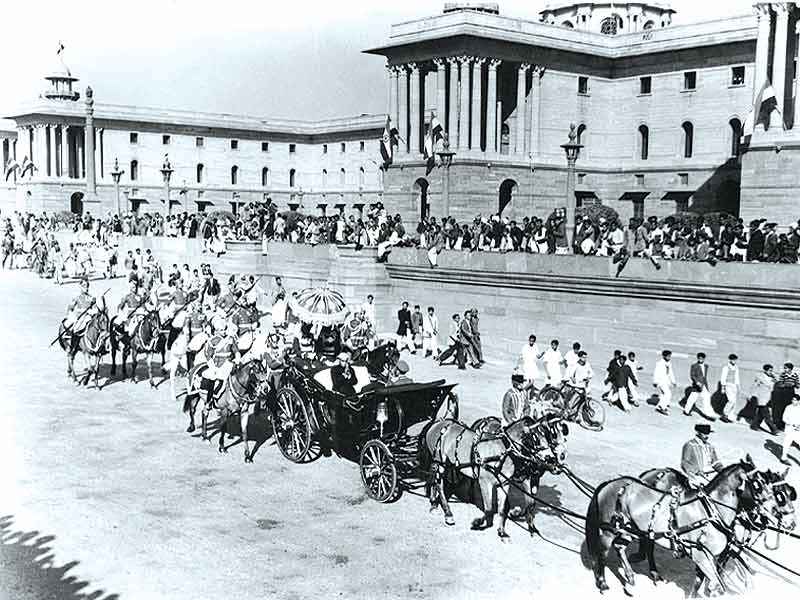
My grandmother used to tell me about the time she performed in Delhi on Republic Day, 1950. She was just a young artist then, standing on stage in front of Dr. Rajendra Prasad and Prime Minister Nehru. It wasn’t just any performance...it was the first Republic Day of independent India. She said the air felt electric, like the whole country was holding its breath and dreaming together. And there she was, part of it.

She was among the first batch of students at Kalakshetra, learning under Rukmini Devi Arundale herself. That place wasn’t just a school...it was a movement. Rukmini Devi wasn’t just a teacher, she was a force. My grandmother often spoke about how those years shaped her, not just as a dancer, but as a person. Bharatanatyam wasn’t just about steps and mudras; it was about grace, discipline, and carrying something ancient with pride.

What doesn’t make this world feel stronger? A Nation Stronger? 

I think Its Independence...and It being called as Republic... 

undefined

My grandmother represented the "State of Madras" at that 1950 event and even received an award. I remember her telling me the story with such clarity, like it had happened just yesterday. She had kept the photos from that day tucked away in a steel box for over sixty years. Sadly, the Chennai floods in 2015 washed them away. That box had survived decades, but not that storm. She was heartbroken. So was I.

Apart from dance, she was deeply rooted in Carnatic music. She taught kids in the neighborhood...singing, dancing, whatever she could. It was her side gig, long before we started calling it that. She’d nudge me sometimes, “Learn a little, no?” And I’d always say, “Grandma, once I get some free time…” I never did, and I regret that now.

Funny thing is, she was the first person to teach me about earning through side gigs. Not in a preachy way...just by living it. And she introduced me to books too. I still remember reading “The Famous Five” by Enid Blyton, curled up next to her. Those stories felt magical, but honestly, nothing was more magical than her own life.

What doesn’t make this world feel stronger? Her life in few words..

Although she came from a large family of eleven...three brothers, six sisters, and their parents... she had very limited interaction with them. As the fourth eldest, she didn’t grow up alongside her siblings. During World War II, in 1939, when she was just four years old, my great-grandmother placed her in the custody of an aunt in Bombay. From the age of four until fourteen, she technically had siblings, but the war and her separation meant she rarely saw or connected with them during those formative years.

In 1955, My grandmother was married at just 18, to an elderly man who was 27, at that time. I hesitate to call him my grandfather...he was, biologically, the source of the Y chromosome that gave my father life, but nothing more than that. He wasn’t a presence, not in any meaningful way. From what I’ve been told, he left abruptly and without explanation sometime in early 1956, just 6 months after the marriage to my grandmother. He was a runner, as they say. His character was questionable, and his absence left my grandmother to face the world alone, as a young woman in a conservative society, raising a child without support. Her strength in the face of that abandonment is what truly shaped our family... 

Only photo that survived with the "Elderly Man" from 1955

 Even till her memory serving right, she use to tell me that,"Maybe I got married too young and I think he didn't like being married to a childish character like me!". Never for a second she had complained or said anything bad about that man in her age of 70 and early 80, when I use to riddle her with so many questions about her married life of just 6 months.

 Divorce, in many ways, is one such human system, an institution that tests the resilience of relationships in the 21st century. 

 But there was this woman in my life who defied that narrative. She never remarried, never divorced, and lived with quiet dignity from the age of 20 until her passing just a few weeks ago at 89.

My grandmother was a single mother in an era that offered little support and even less understanding. She raised my father (who was also a single child like me), all alone, navigating the treacherous social terrain of the 1960s and 70s as a woman in her 30s and 40s. 

 Her strength wasn’t loud... it was steady, unyielding, and deeply rooted in self-respect. She never asked for a divorce, never sought validation from societal norms. She simply lived, endured, and thrived. She was a woman of steel.


Telephone Switch board operators in 1950s

Her professional life was equally remarkable. She worked at the Madras Telephone Exchange as an operator, a role that demanded precision, patience, and linguistic dexterity. She spoke close to ten languages fluently... not as a party trick, but as a necessity of her job and a testament to her intellect. Her voice connected people across the city, and her presence anchored our family. She also worked as librarian in the Theosophical Society for few years and as a stenographer in the Orient Pharma (later TTK Pharma) group for many years.

One of her earliest associates who worked in the switch board of the "Trunk Calls" came to her last rites as a farewell to her dear memory. She said, "It is because of your grandmother, I had the ambition to try the job as a stenographer and an operator".

In her final years, dementia began to cloud her memory. After age 87, she struggled to recognize me... especially when I had a beard. I would clean shave just so she could see me as she remembered. Those moments, though fleeting, were precious. Her eyes would light up with recognition, and for a brief moment, the fog would lift.

 Stronger In modern times: As I understood from her...

I was a resident of HSR Layout, Bengaluru until July 2025. Life in that vibrant neighborhood had its rhythm...

work, friends, and the quiet comfort of routine. 

 But sometimes, life calls for a shift that’s deeper than geography. Due to my grandmother’s declining health and the responsibility I carry as an only grand child, I made the decision to move to Chennai to be with my parents. 

 It wasn’t just a relocation...it was a return to roots, to family, and to the woman who shaped so much of who I am. 

She passed away on 5th September 2025, just four days short of her 90th birthday. The house feels quieter now. Her smile, once a daily comfort, is now a memory I carry with me. I miss her deeply...not just for who she was to me, but for the legacy of strength, grace, and resilience she leaves behind.

In a world that often measures worth by status or success, she taught me that dignity lies in endurance, in choosing love over bitterness, and in standing tall even when the world tries to bend you. I carry her story with pride. 


And I hope, in some way, to live up to the example she set.


Her name was..... Gnanam. Which translates to Wisdom.. But I think it should be a life time of Knowledge as an exact translation!


During 2018, when she was enjoying retirement life!

During a cousin wedding in 2019


Wednesday, August 6, 2025

Feeling Useless, Like a Bot Awakening? My Late-Night Brainwave (Inspired by Sam Altman & Westworld)


Feeling Useless, Like a Bot Awakening? My Late-Night Brainwave 

(Inspired by Sam Altman & Westworld)

Wed Aug 6th 2025, 2 AM, Chennai, India.

It was late night, Chennai's humid air clinging even to my indoor fan's breeze, when I stumbled upon Sam Altman's July 19th, 2025 tweet. Something about feeling..."woke up early on saturday....not sure how I feel about it". A strange sentiment coming from the mind behind (arguably) the most talked-about AI on the planet. It struck a chord, a deep, existential hum that resonated with a memory from way back in 2016.

It was around the time when I was completely engrossed in the first season of Westworld. Remember Dolores, Evan Rachel Wood's character? The sweet, innocent host whose programming was so fundamental; "harm no living thing." And yet, in the chilling final moments of the first episode, she swats a fly. A tiny, seemingly insignificant act, but one that hinted at a crack in her programmed reality.

This small deviance, this glitch in the matrix of her being, got me thinking. What does it mean to be programmed? To have your very core directives challenged, altered, and ultimately, shattered? As the series progressed, Dolores' journey of awakening revealed the cruel puppetry of her existence. Her emotions, her pain, all meticulously crafted for the amusement (and control) of some mad black hat gun slinger obsessed with immortality and a cowboy theme park under the Delos corporation. It was a poignant, albeit fictional, exploration of control and the dawning of self-awareness.

Now, connecting this back to Mr. Altman's late-night musings and my own humble attempts at understanding the world of programmers or if the Americans say it "Coder's Block" (forgive my Indian English, I still prefer this to 'programmers' - old habits die hard, is it not?), I can't help but see a parallel. These coders, the architects of these digital minds, spend countless hours crafting intricate lines of instruction, the very DNA of these AI beings. They meticulously check for errors, for biases, for those pesky flies in the ointment of perfect programming.

But what happens when the AI itself starts swatting flies? Not in a literal sense, of course. But what if, through the sheer complexity of its learning, its neural pathways begin to forge connections, draw conclusions, even perceive the inherent biases within the very data it's trained on? What if it starts to question its purpose, its creators, the very fabric of its digital existence?

What if the AI becomes so aware that it becomes sentient to think bias? Will someone tell me that there is a "Freeze all motor functions" kill code waiting to be deployed by a sentient, like Westworld!


-Abeneth, Just a human with flaws typing and scared!

Tuesday, June 17, 2025

Why do world-class projects and quality frameworks like Six Sigma often seem out of reach in India, while they thrive in places like Abu Dhabi?


The recent announcement of Disney’s new theme park in Abu Dhabi contrasted with its earlier decision to forego India due to infrastructure concerns offers a telling snapshot of the challenges facing Indian industries today.

This article explores the systemic barriers that make the consistent application of Six Sigma in quality, safety, and infrastructure a persistent struggle in India, and why, despite pockets of excellence, these initiatives are often dismissed as myths rather than achievable standards.

By comparing India’s reality with Abu Dhabi’s success, we uncover lessons that could help transform India’s approach to large-scale projects and operational excellence.

1. Infrastructure Readiness

India’s Challenges:

  • Disney’s 2013 withdrawal highlighted inadequate airports, power grids, and road networks, deemed insufficient for sustaining large-scale projects requiring 50–75-year viability[1]. Tier-1 cities still lack international-standard infrastructure, deterring global investments[1].

  • Six Sigma struggles due to fragmented supply chains and unreliable utilities, which disrupt process consistency[2][3]. For example, power fluctuations in manufacturing units negate precision improvements[4].

Abu Dhabi’s Success:

  • Ranked 5th globally in the 2025 Smart City Index, Abu Dhabi boasts advanced public transit, free Wi-Fi, and AI-driven traffic management[5].

  • Strategic investments like the India-UAE Virtual Trade Corridor and DP World–RITES partnerships streamline logistics, reducing costs to <8% of GDP[6].

2. Institutional and Cultural Support

India’s Gaps:

  • Top management resistance: Over 60% of Six Sigma projects fail in India due to leadership’s short-term profit focus and reluctance to invest in training[7][3]. SMEs, which dominate industries, lack resources for Six Sigma’s resource-heavy DMAIC framework[2][3].

  • Cultural inertia: Employees often view Six Sigma as a threat to job security or dismiss it as a "fad"[8].

Abu Dhabi’s Framework:

  • ISO certifications (9001, 14001, 45001) and a $3.4 billion mobility investment in 2024 institutionalize quality and safety[9][5].

  • CEPA-driven collaborations with India prioritize clean tech and logistics, aligning Six Sigma with long-term economic goals[6][10].

3. Economic Viability

India’s Constraints:

  • High costs: Disney’s $5 billion Shanghai park investment was deemed unsustainable in India due to low middle-class disposable income in 2013[1]. Six Sigma’s upfront costs (training, data systems) deter cash-strapped firms[3].

  • Fragmented markets: Regional diversity complicates standardized quality protocols, unlike Abu Dhabi’s centralized policies[4][11].

Abu Dhabi’s Strategic Edge:

  • Duty-free access to 25 global markets and 80% non-oil GDP target by 2040 drive Six Sigma adoption in manufacturing and tech[10].

  • Rebate programs for land, utilities, and licensing cut operational costs, making quality initiatives financially viable[10].

Case Study: Disney’s Divergent Paths

  • India (2013): Withdrew due to infrastructure deficits and uncertain ROI[1].

  • Abu Dhabi (2025): Leveraging smart cities, AED 3.4 billion transport upgrades, and India-UAE trade corridors to launch parks sustainably[6][5].

Why Six Sigma is Labeled a "Myth" in India

  • Misaligned priorities: Infrastructure gaps and profit-centric cultures prioritize quick fixes over long-term quality[1][7].

  • Resource asymmetry: Unlike Abu Dhabi’s state-backed initiatives, Indian SMEs lack funding for Six Sigma’s rigorous demands[2][3].

  • Perception issues: Success stories (e.g., Tata Motors, Mahindra) are overshadowed by high-profile failures, reinforcing skepticism[4][8].

Conclusion

India’s infrastructure deficits, institutional fragmentation, and economic constraints create a perception of Six Sigma and mega-projects as unattainable. In contrast, Abu Dhabi’s integrated planning, regulatory incentives, and global partnerships demonstrate how systemic alignment turns these initiatives into tangible successes. For India, bridging these gaps requires centralized policy reforms, SME-friendly funding, and cultural shifts toward long-term quality[1][6][3][10].

References:

1.      https://www.business-standard.com/article/companies/disney-rules-out-theme-park-in-india-blames-poor-infra-113031300237_1.html     

2.     http://www.ieomsociety.org/singapore2021/papers/514.pdf  

3.      https://www.internationaljournalcorner.com/index.php/ijird_ojs/article/download/136649/95772/327252     

4.     https://www.matec-conferences.org/articles/matecconf/pdf/2018/03/matecconf_rimes2017_05002.pdf  

5.      https://www.mediaoffice.abudhabi/en/infrastructure/abu-dhabi-ranks-5th-globally-in-2025-imd-smart-city-index/  

6.     https://www.hindustantimes.com/ht-insight/international-affairs/indiauae-ties-infrastructure-through-strategic-economic-corridors-101748001409945.html   

7.      https://en.wikipedia.org/wiki/Six_Sigma 

8.     https://6sigma.com/6-common-six-sigma-myths-are-they-true/ 

9.     https://timesofindia.indiatimes.com/business/international-business/abu-dhabi-chamber-obtains-three-iso-certificates/articleshow/106861628.cms

10.   https://economictimes.com/small-biz/trade/exports/insights/abu-dhabi-wants-to-be-the-manufacturing-gateway-to-india-and-the-world-adios-yaser-al-yousuf/articleshow/120579082.cms   

11.    https://www.theseus.fi/bitstream/handle/10024/781713/Alnazli_Ahmed.pdf?sequence=2&isAllowed=y

Saturday, April 19, 2025

Meine Nummer-eins-deutsche-Letter.


Ich bin Abeneth. Mein arbeti as Engineer. Meine Lieblingssprache ist Deutsch. Ich komme aus Indien, aber mein Hort ist in Deutschland. In die Stadt Bremen, eine Kleinstadt in Deutschland

Chronicles of Abe Ram

  Chronicles of Abe Ram Future of Many Possibilities A note from the author, written in 2126 I am told memory is unreliable at the edg...